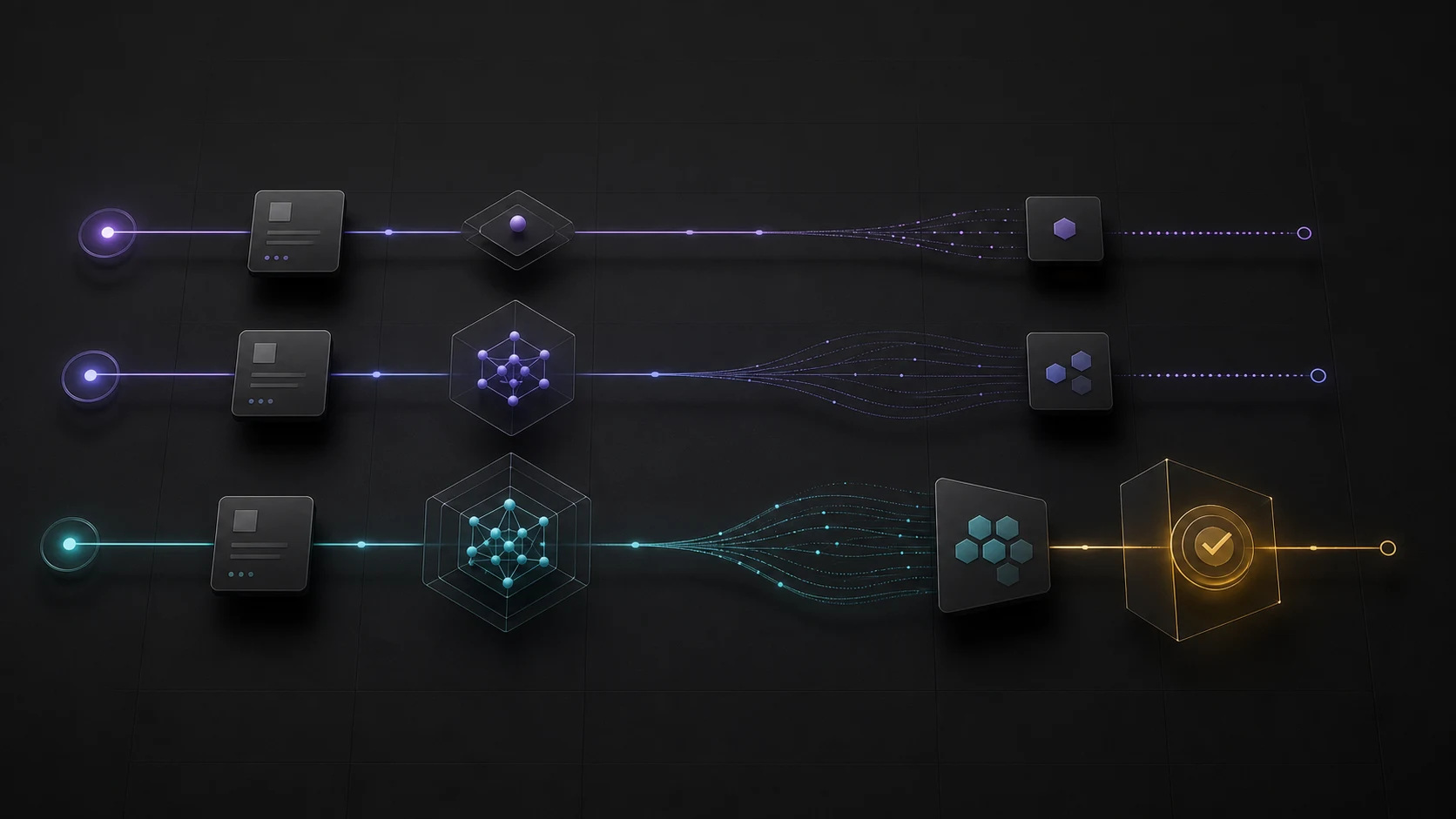
Claude Opus 5 launched on 24 July with an effort control that lets teams choose how much reasoning a task receives. Anthropic says the model keeps Opus 4.8 pricing at US$5 per million input tokens and US$25 per million output tokens, while its Platform notes list effort levels from low through max.
Why does effort matter for a business workflow?
A stronger model does not automatically make a process safer or more valuable. A low-risk meeting summary, a multi-step customer segmentation task and a change to a live website have different costs of delay, error and review. Treating them as the same job can waste budget on simple work and under-govern consequential work.
RxAI insight
Model effort is an operating setting, not a substitute for workflow design. Pair it with scoped data access, an explicit stop condition and a named reviewer.
What does the release actually show?
Anthropic reports that Opus 5 is designed for everyday use and that effort can optimise for deeper reasoning or faster, cheaper results. Its announcement cites a roughly 1.5× pass-rate advantage over the next-best model at the same cost per task on Zapier AutomationBench. That is a vendor-reported benchmark result in a specific evaluation, not a promise of the same outcome in every business.
How should an SMB set task tiers?
- Low-risk, reversible work: use lower effort for public-source summaries, meeting notes and content drafts. Keep a human fact and tone check.
- Multi-step work: use a middle setting for structured analysis, content-gap reviews or segmentation. Require the model to state sources, assumptions and handoff conditions.
- High-impact work: do not let a model act alone on payments, customer records, production publishing or sensitive data. Use least-privilege access, an approval gate and a recoverable log.
What should you measure before scaling?
Choose one workflow that repeats each week. Record the allowed data, chosen effort level, reviewer, successful outcomes, manual corrections, retries and failures. Run the same task at least five times before claiming a model upgrade improved the workflow. This reveals the full cost per successful task, rather than just token price or a persuasive demo.
How do fallbacks fit into the plan?
Anthropic also announced beta mid-conversation tool changes and server-side fallbacks for safety-classifier refusals. Those features can improve continuity, but a fallback path still needs its own permissions, review rules and test cases. A workflow should fail safely rather than silently swapping models and taking a consequential action.
What is the practical next step?
Start with a one-page task–effort–review table, then test it on one narrow workflow. RxAI can help turn that table into a governed automation with permissions, monitoring and a rollout plan. Explore our AI automation and consulting services or book a consultation.
Sources
- Anthropic: Introducing Claude Opus 5 — release date, pricing, effort setting, benchmarks and beta updates.
- Claude Platform release notes — effort ladder, model availability, pricing and fallback details.
Frequently Asked Questions
Anthropic describes effort as the primary control for Opus 5, with levels from low to max. It lets teams trade reasoning depth against speed and token use for a defined task.
No. Low-risk drafts and summaries can usually use a lower setting with review, while consequential tasks need stricter permissions, evidence checks and a human approval point.
Choose one repeated workflow, document its data boundary, effort level and reviewer, then run several comparable trials and measure successful-task cost, corrections and failure modes before scaling.
Want This Applied to Your Business?
RxAI offers a free 30-minute consultation to map how these strategies fit your operations. No obligation, no sales pitch.
Book Free Consultation