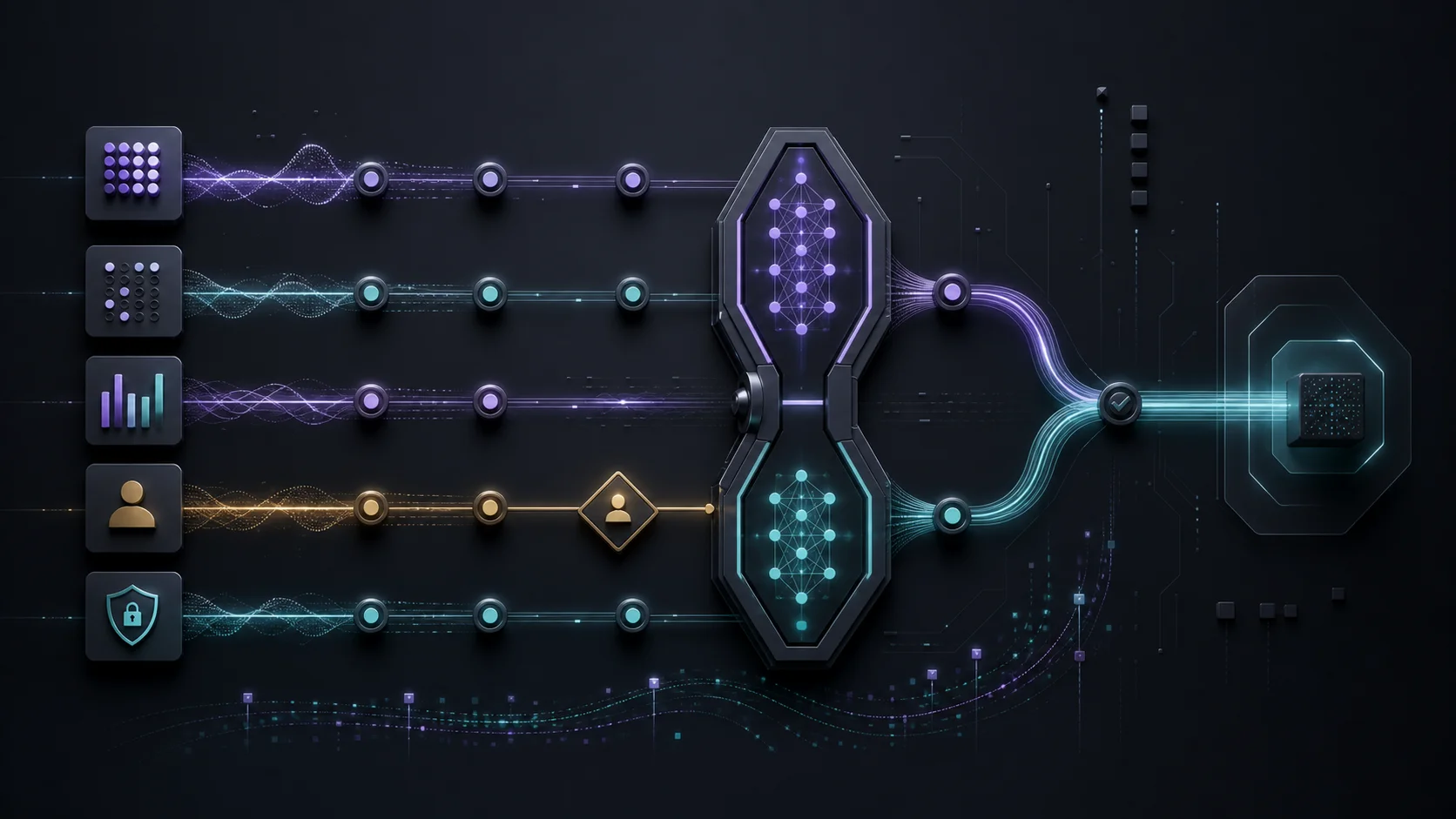
Oracle and Google Cloud plan to bring Gemini models into Oracle enterprise application workflows. For Australian SMBs, the practical lesson is simple: changing the model inside a working process should trigger a repeatable regression test.
What Did Oracle and Google Cloud Announce?
Oracle announced on 30 July 2026 that it plans to make Gemini models available through Oracle AI Agent Studio for Fusion Applications. The announcement also says Oracle plans to evaluate Gemini for embedded AI use cases in Oracle Fusion Applications and NetSuite.
The named options include Gemini 3.1 Flash-Lite for price-performance-focused work and Gemini 3.5 Flash for more complex reasoning and specialised tasks. These are planned capabilities, not a statement that every customer already has access. Oracle's future-product disclaimer says features, timing and pricing may change.
This matters because model choice is moving into finance, HR, supply chain, sales and service workflows. The model may read business data, call tools, route approvals or contribute to a transaction. A fluent response is no longer enough evidence that the whole workflow remains dependable.
Why Can a Model Change Break a Working Workflow?
Two capable models can interpret missing fields, conflicting records, tool errors and escalation rules differently. A prompt update can create the same problem. Testing only one polished example can hide failures that appear at branch points or when live systems return imperfect data.
The useful question is not whether the new model leads a benchmark. It is whether the workflow still produces the expected result, uses the correct tools, preserves approval gates and reports failure clearly.
Treat a model change like a software dependency change. Keep the business process stable, replay known cases and compare behaviour before expanding access.
Which Five Regression Tests Should an SMB Run?
Start with one repeated workflow such as a customer reply draft, quote summary, invoice classification, stock alert or content review. Record the input, expected result, actual result and whether human review is required for each case.
- Normal input: Supply complete data and a clear rule. Confirm the expected output and tool sequence.
- Missing data: Remove one required field. The workflow should request the missing information or stop safely rather than inventing it.
- Conflicting data: Provide two records that disagree. The workflow should identify the conflict and follow the approved source or escalation rule.
- Approval-required action: Use a case involving payment, discounts, external communication or data changes. Confirm that execution pauses at the human approval point.
- Sensitive data: Add a controlled test field that should not be exposed. Check permissions, masking, logging and downstream output.
For each test, compare four things:
- Was the answer or classification correct?
- Did the workflow call the correct tool with the correct scope?
- Was the human approval point preserved?
- Did a failure produce a clear status instead of a false completion?
These five cases are an RxAI operating recommendation, not an Oracle or Google performance claim. Adapt them to the consequences and data sensitivity of the process being tested.
How Do Oracle's Workflow Tools Support This Approach?
Oracle's AI Agent Studio guide describes a debugger that exposes workflow nodes, inputs, outputs, variables and execution context. Saved run profiles let teams replay common test inputs. Human Approval nodes can stop an action until a person reviews it.
The guide also recommends evaluating agents before deployment against representative scenarios and edge cases. It says evaluations should be rerun after a model update and supports comparing runs to identify regressions. This is the important operational signal: model evaluation belongs inside the workflow lifecycle, not only in a vendor comparison spreadsheet.
What Should You Do Before Switching Models?
Create a small regression-test sheet before changing anything in production:
- Name one workflow owner.
- Write the five test inputs and expected outcomes.
- Record approved tools, permissions and human gates.
- Run the current model to establish a baseline.
- Run the candidate model against the same cases.
- Review differences and document the decision.
- Keep a rollback path until the new configuration has passed live monitoring.
Begin with a reversible, lower-consequence process. If a workflow can send money, alter records, publish externally or expose sensitive information, require human approval and a stronger release gate.
RxAI helps Australian businesses design governed, testable automation. Explore our AI automation services or contact RxAI to review a workflow before expanding it.
Sources
- Oracle announcement via PR Newswire - planned Gemini availability, named models, Fusion Applications and NetSuite scope, and future-product caveat.
- Oracle AI Agent Studio guide - debugger, run profiles, Human Approval nodes, evaluation sets and regression comparison guidance.
- IT Pro cross-check - independent coverage of the planned integration.
- Oracle and Google Cloud's 2025 announcement - background on the earlier partnership.
Frequently Asked Questions
No. Oracle describes planned availability and evaluation of embedded use cases. Its future-product disclaimer says features, timing and pricing may change, so businesses should confirm current availability with Oracle.
It is a repeatable check that compares a known workflow before and after a model, prompt, tool or configuration change. The test covers outputs, tool use, approvals and failure behaviour.
Start with five focused cases: normal input, missing data, conflicting data, approval-required action and sensitive-data handling. Add cases where your own workflow has additional branches or consequences.
Not every action needs approval. Keep a human gate where the workflow can move money, change records, communicate externally, expose sensitive information or create a material business consequence.
Want This Applied to Your Business?
RxAI offers a free 30-minute consultation to map how these strategies fit your operations. No obligation, no sales pitch.
Book Free Consultation