What Does the Acquisition Change?
Cursor announced on 14 August 2026 that its acquisition by SpaceX had closed. The company said the Cursor team would join the SpaceXAI group to help improve Grok, Grok Build, Grok Bot, Grok API, Cursor and related products. TechCrunch independently reported the completed transaction on 15 August.
Cursor also described access to a larger GPU fleet and the goal of building models that are more capable and more economical to run. Those are company statements about the resources and direction the deal may make possible, not a guarantee that every customer will immediately see lower costs, faster responses or unchanged product terms.
For a small Australian team using an AI coding agent, the practical question is therefore not whether the news is good or bad. It is whether your workflow is clear enough to keep operating if the product, ownership, model choices, pricing or data arrangements change.
Why Is an Ownership Change a Vendor-Risk Checkpoint?
AI coding tools sit close to valuable business assets. They may read source code, configuration files, issue trackers, documentation, dependency manifests and sometimes environment variables. They may also suggest or apply changes, run commands, create pull requests or connect to deployment systems. A change in ownership does not mean those controls have changed, but it is a sensible moment to verify them rather than rely on memory.
Review the boundaries around the tool before you review its roadmap:
- Access: which repositories, branches, files, terminals and connected services can the agent reach?
- Data: could customer information, private keys, unreleased features or production configuration enter a prompt or log?
- Commercials: which plan, model, usage limit and billing assumption does the workflow depend on?
- Continuity: can the team preserve its repository, rules, tests and review process if the tool becomes unsuitable?
RxAI Practice
Treat a vendor announcement as a review trigger, not a migration order. The objective is to make the workflow portable and observable enough that your team can choose calmly. That starts with how the work is handed over in the first place — see delegating, reviewing and measuring agentic coding work.
What Should Go on the Vendor-Risk Card?
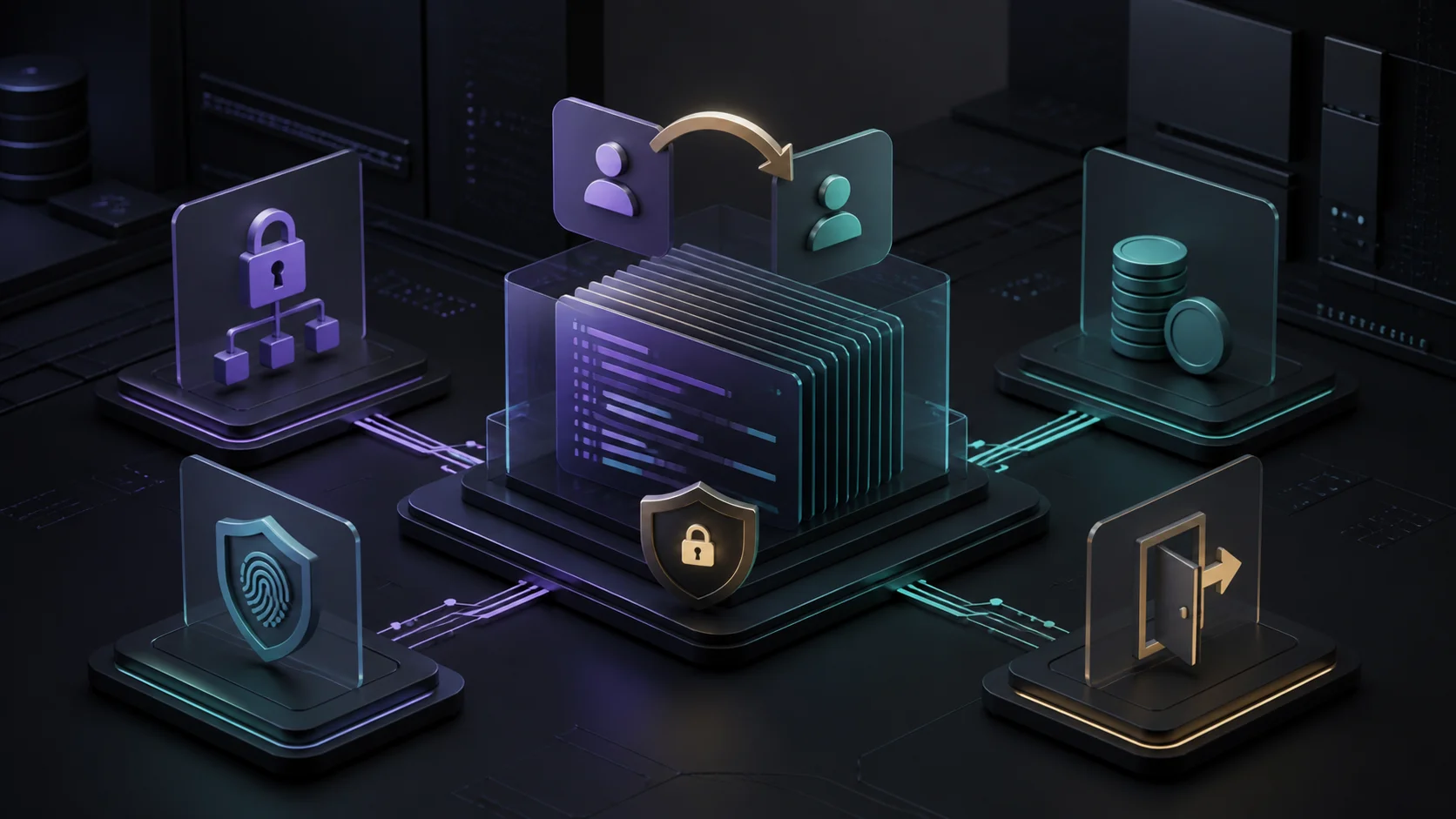
Start with a one-page card for one low-risk repository. Keep it short enough that a technical lead and a business owner can review it together. Four sections are enough to expose the most important dependencies:
- It can read: list repositories, folders, tickets, documents and services available to the agent. Mark anything that is excluded by policy.
- It can change: record whether the agent can edit files, run tests, open pull requests, merge changes or trigger deployment. Separate proposal rights from execution rights.
- It must not receive: identify personal information, credentials, customer exports, production secrets and other restricted material. Document the redaction or isolation step.
- We can continue by: name an alternative tool or manual route, and keep the repository, rule files, test commands, prompts and human approval steps in a team-controlled location.
Add the current tool version, selected model, billing plan, access settings and a short test result. The point is not to create a large compliance document; it is to leave enough evidence for someone else to understand the dependency later.
How Can You Test an Exit Path Without Migrating Today?
You do not need to rebuild a production workflow to learn whether it is portable. Choose a repository with no customer data, formal credentials or live deployment access. Ask the agent to read the project instructions, propose a small change, create a branch, run the existing tests and produce a change summary. Keep a person in the loop before any merge or deployment.
During that exercise, save the files that make the work repeatable: repository rules, prompt patterns, test commands, expected outputs, review criteria and the decision log. If the same task can be completed with another tool or by a human using the repository alone, you have a credible fallback. If it cannot, the dependency deserves a deeper design review.
A vendor risk card is useful when it describes the work your team can still do, not only the product your team currently pays for.
When Should You Change Tools?
Do not stop using Cursor solely because ownership changed, and do not assume the acquisition will improve your workflow without testing. Make a change when the current arrangement no longer meets your requirements for data handling, permissions, reliability, cost visibility, model choice or team continuity.
That decision is easier when the risk card already exists. You can compare the current tool with an alternative against the same low-risk task, the same review standard and the same repository controls. You can also explain the decision to staff and clients without turning a headline into a technical panic.
If you want help mapping the workflow, approval points and fallback plan, see RxAI’s AI strategy and automation services or book a consultation.
Sources
- Cursor Team, “Cursor is now a part of SpaceX” — 14 August 2026. Official announcement of the completed acquisition and the company’s stated model and compute direction.
- TechCrunch, “SpaceX officially closes its Cursor acquisition” — 15 August 2026. Independent reporting on the completed transaction.
Frequently Asked Questions
Cursor announced that its acquisition by SpaceX had closed. It also said the combined company would work on Grok, Cursor and related AI products, while describing larger GPU resources as a capability to build toward.
A change of ownership can affect product direction, access arrangements, commercial assumptions or data-handling expectations. It is a practical trigger to review permissions, sensitive data, costs, version dependencies and fallback options.
Record what the agent can read, what it can change, what data must not be sent, and how the team would continue if the vendor or product became unsuitable. Add the current version, model settings, billing assumptions and test results.
Not automatically. Use the announcement as a governance checkpoint, test a low-risk repository with human approval, and change tools only when the current arrangement no longer meets your security, cost, reliability or workflow requirements.
Want This Applied to Your Business?
RxAI offers a free 30-minute consultation to map how these strategies fit your operations. No obligation, no sales pitch.
Book Free Consultation