What changed in Gemini Managed Agents?
Google announced new Managed Agents capabilities for the Gemini API on 7 July 2026. The important business signal is not another agent label. It is a shift in how agent work is expected to run: less like a synchronous chat window, and more like a server-side job that can keep working after the user leaves the screen.
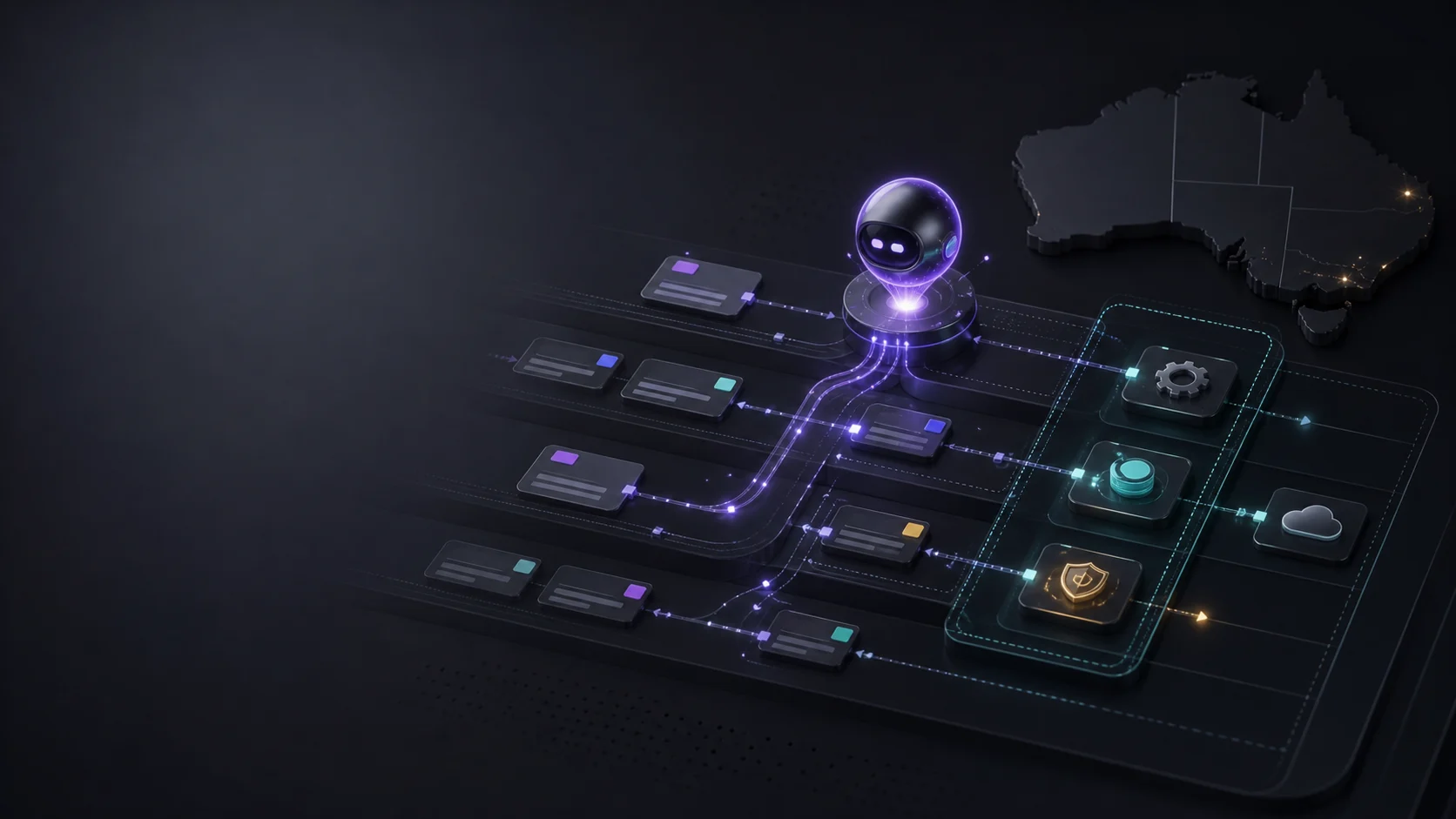
The update covers background execution, remote MCP server integration, custom function calling and credential refresh. For an Australian SMB, those capabilities point to a practical design pattern: treat AI agents as workflow workers with task state, tool boundaries and recovery paths.
Why are live-chat agents fragile for real work?
Chat-style AI is useful for questions, drafts and summaries. Operational agent work is different. A useful agent may need to research a market, classify support tickets, clean product data, prepare a report, call approved tools and return a structured result.
That work can take minutes or longer. If the product design depends on the user waiting in a live browser tab, or on one long-running HTTP request staying healthy, the experience becomes brittle. Background execution lets the application start an interaction, receive an interaction ID, then poll, stream progress or reconnect later.
How should SMBs design background agent work?
Start with the job ticket, not the model name. A good AI workflow defines the input, allowed tools, progress states, completion conditions and failure response before automation touches live operations.
For daily competitor summaries, SEO content audits, product-data cleanup, customer ticket triage or social content preparation, the better interface is usually asynchronous: start the job, show progress, notify when complete, and keep the output reviewable. That makes the agent behave more like a disciplined assistant with a task queue than a chatbot forced to answer instantly.
Where should tool access be controlled?
Google's documentation describes Antigravity Agent as a managed agent that can reason, execute code, manage files and browse the web inside a Google-hosted secure Linux sandbox. Supported tools include code execution, Google Search, URL context, filesystem tools where an environment is specified, custom functions and remote MCP servers.
That capability is useful, but it is not a reason to open every system at once. Custom function calling is the more important pattern for business systems: when an agent needs local business logic, an interaction can move to a requires-action state so the client executes that logic and returns the result. The agent can request an action, while the company keeps control over customer data, orders, payments and internal databases.
What does credential refresh change?
Credential refresh is a production detail that matters once agents become part of day-to-day operations. Access tokens and short-lived API keys expire. Network rules change. Long-running work may need to reconnect without losing files, installed packages or repository state inside the sandbox.
The lesson for SMB leaders is simple: agent automation needs operational design. It needs ownership, logs, credentials, retry rules, approvals and a clear way to recover when a task pauses or fails.
What should business leaders do next?
Before choosing an agent platform, map three questions: is the task long-running, which tools are genuinely required, and which steps must stay inside company-controlled systems? If those answers are unclear, the agent may look impressive in a demo and still be hard to operate safely.
RxAI helps teams turn repeatable work into practical AI workflows with clear controls, human review points and measurable delivery paths. If you are planning agent automation, start with the workflow design in our services approach before committing to a platform.
Sources
- Google Blog - Expanding Managed Agents in Gemini API: background tasks, remote MCP and more
- Google AI for Developers - Antigravity Agent
- Google AI for Developers - Background execution
Frequently Asked Questions
It is a Gemini API managed-agent pattern where Google handles parts of the agent runtime, including tool use in a hosted sandbox. For SMBs, the useful idea is to design agent work as controlled workflows rather than one-off chat prompts.
Background execution lets a long-running interaction continue server-side and return an interaction ID. An application can then poll status, stream progress or reconnect later instead of keeping one fragile live request open.
Not by default. Agent tool access should be scoped. Custom function patterns can let the agent request an action while the company-controlled client executes sensitive business logic and returns the result.
Define the task input, approved tools, success criteria, failure handling, credential ownership, review points and notification path. Those decisions make automation easier to operate after the demo stage.
Want This Applied to Your Business?
RxAI offers a free 30-minute consultation to map how these strategies fit your operations. No obligation, no sales pitch.
Book Free Consultation