
If you work in SEO or GEO, the hardest part of generative AI search has not been proving that it affects your traffic. The harder problem was that you could not clearly see how it was affecting you at all. That is the gap Google has just started to close.
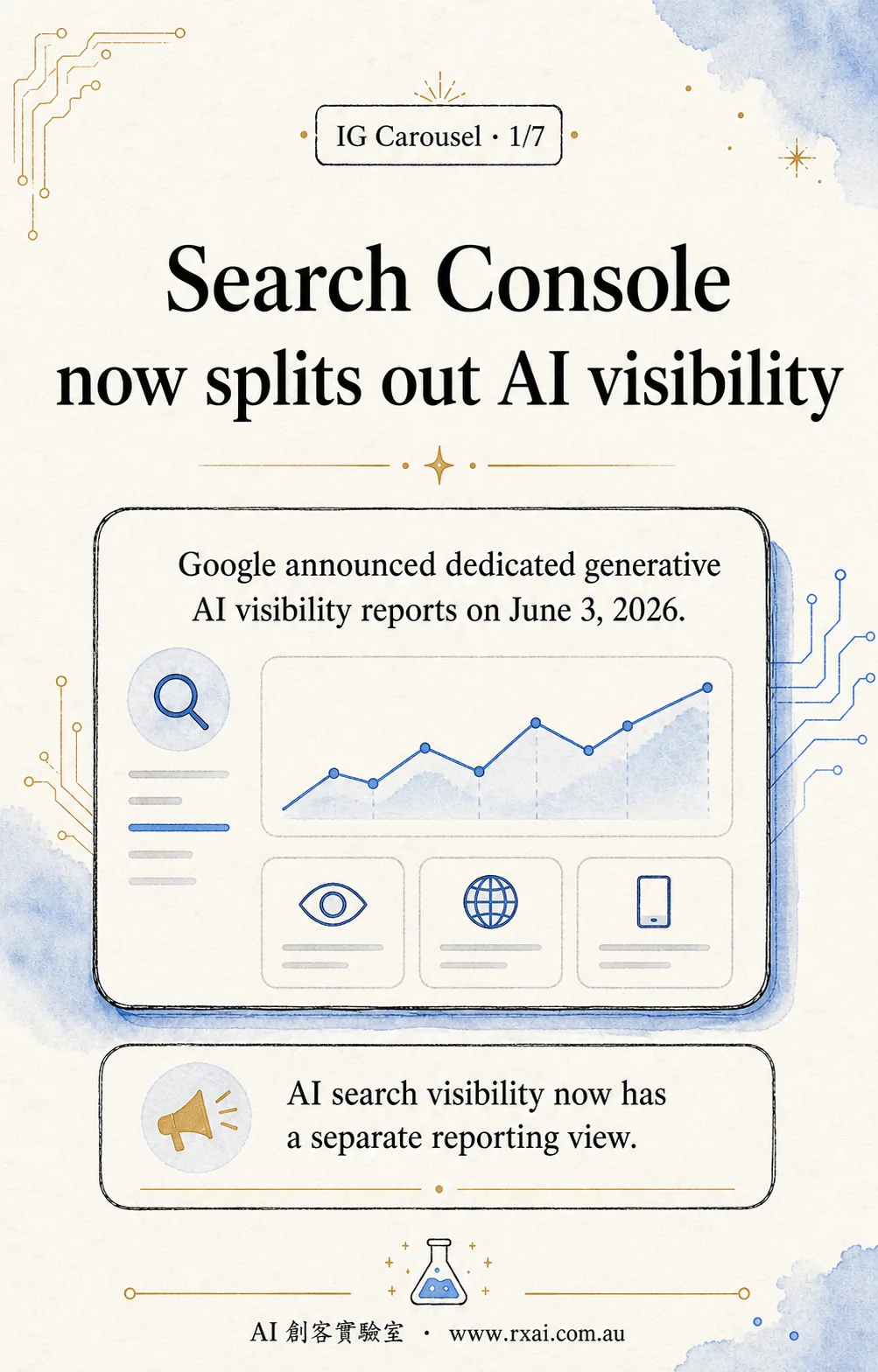
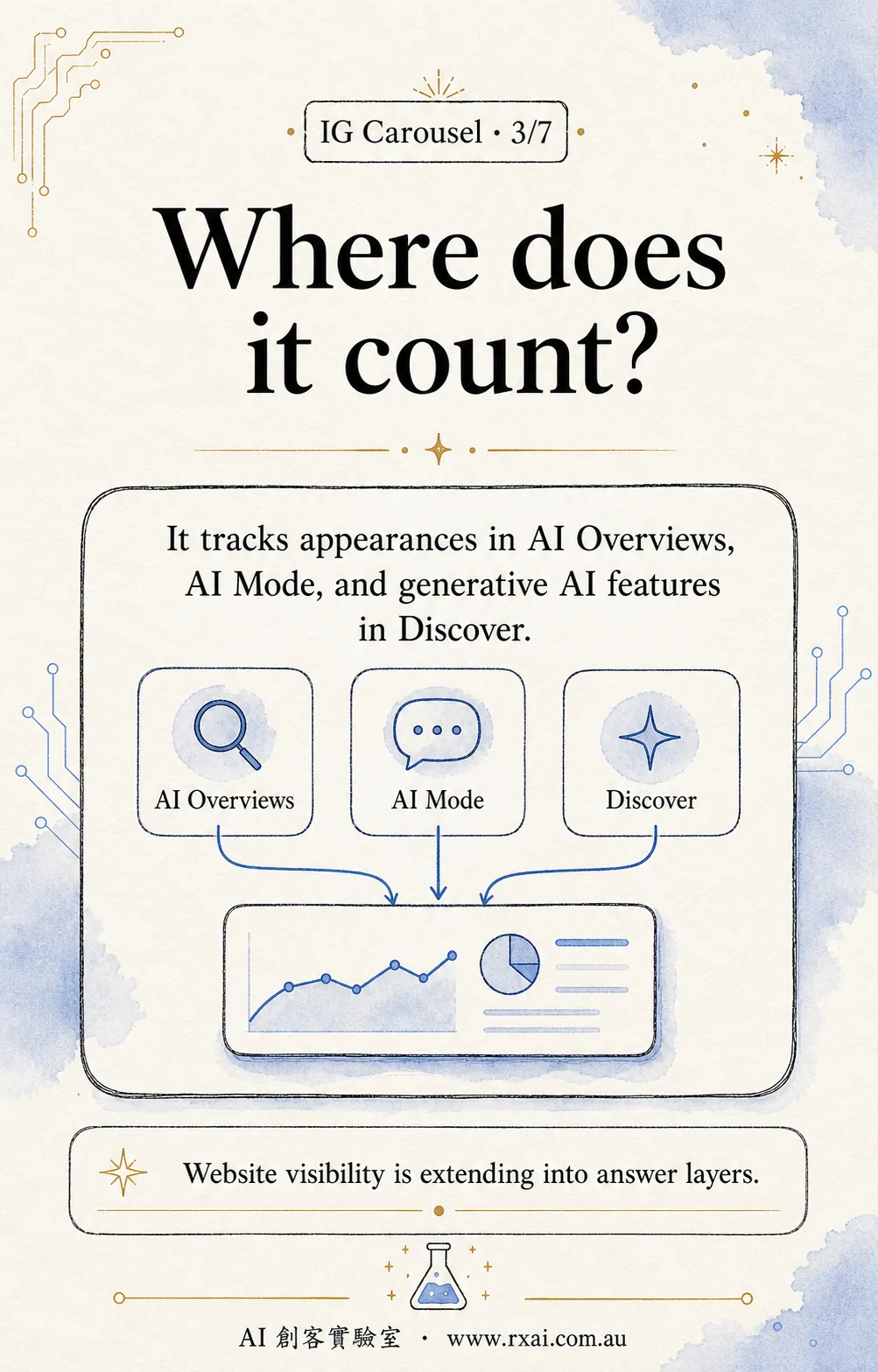
On 3 June 2026, Google introduced new generative AI performance reports in Search Console, splitting out how your site appears in AI Overviews, AI Mode, and the generative AI features in Discover. The significance is not simply one more report. For the first time, AI search visibility has its own measurement view.

What Exactly Did Google Change?
According to Google Search Central's announcement, the new reports break out a dedicated view for generative AI visibility from your overall Search Console performance data. In practice, that lets you separate two things that used to be blurred together: whether your site has visibility in ordinary search results, and whether your site is reaching the AI answer layer.
What Can You Actually See in the New Reports?
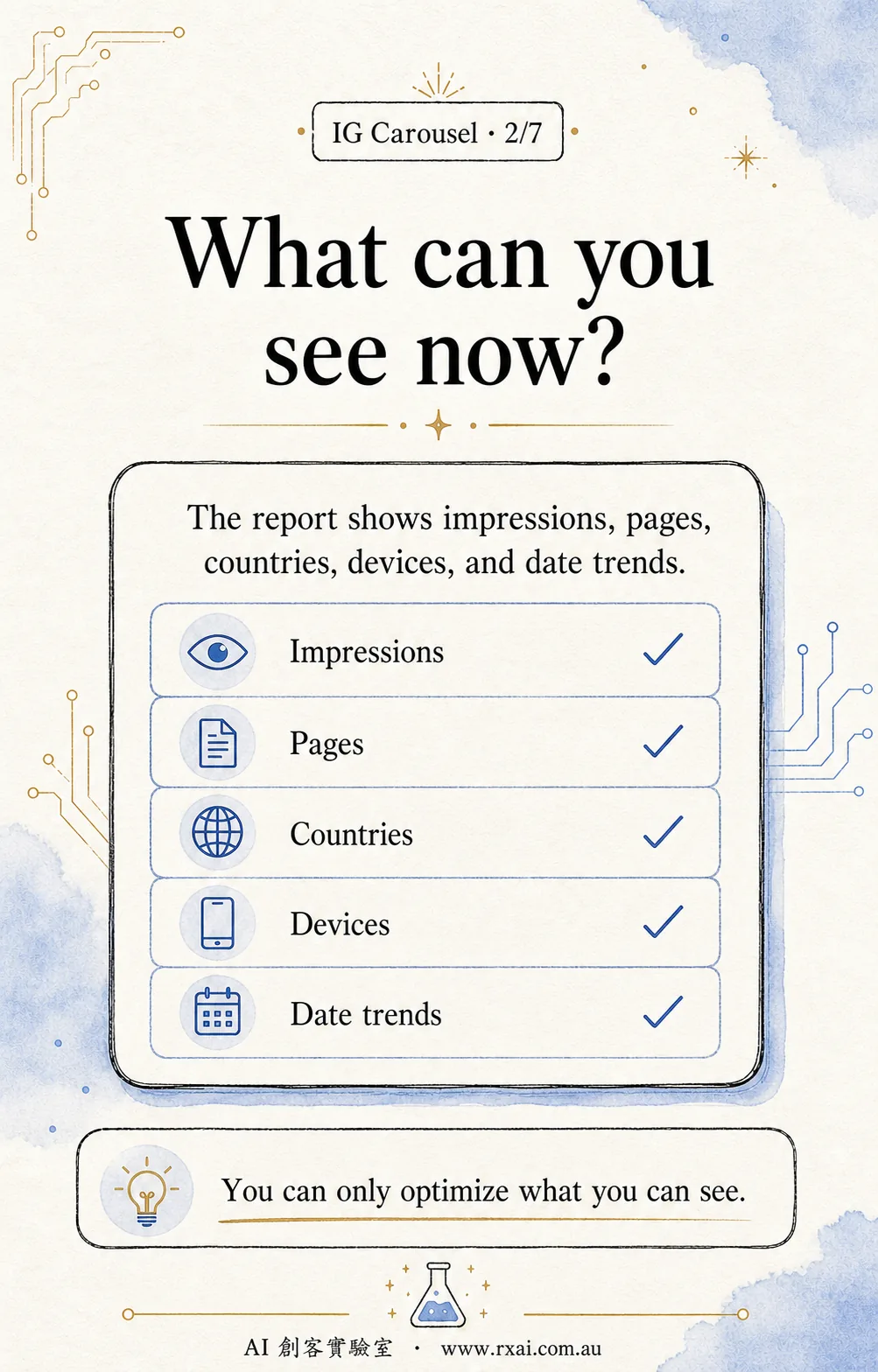
Google says the new view currently surfaces impressions, the pages that appear in AI features, countries, devices, and date-based trends. That is enough to answer a question most brands could previously only guess at: are we being surfaced inside AI answers, and on which pages?
Do You Need Special “AI SEO” to Appear?
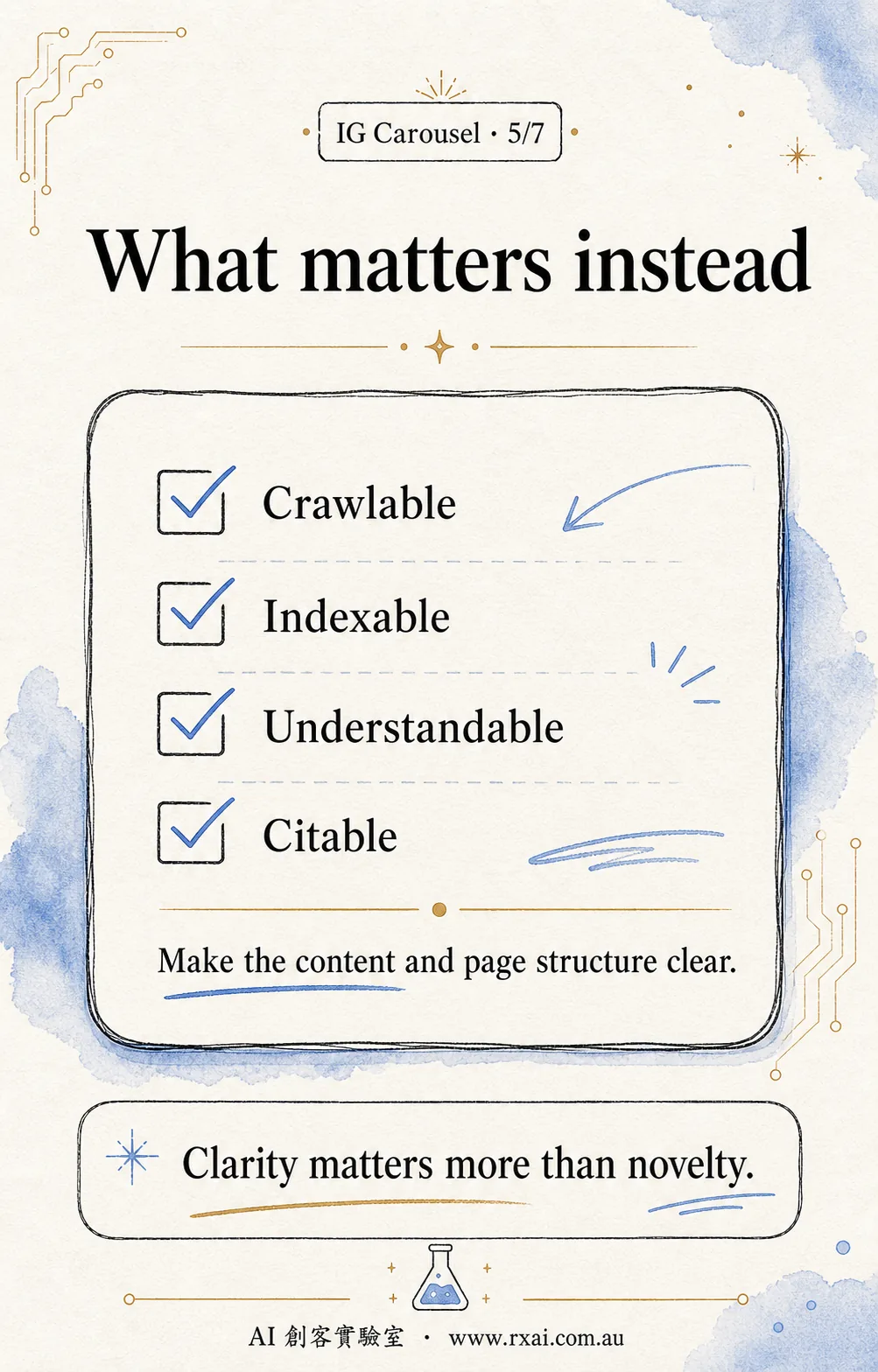
This is the part worth remembering. Google continues to state plainly that appearing in AI Overviews or AI Mode does not require a separate AI SEO toolkit. Its AI features and your website documentation says there are no additional technical requirements — no special schema, no machine-readable AI files, and no new dedicated markup.
Appearing in AI features has no extra technical requirements: no special schema, no AI-specific files, and no new markup. The basis is still strong, fundamental SEO. — Paraphrased from Google Search Central, “AI features and your website”
The fundamentals are the same ones that have always mattered: content that can be crawled, clear internal links, important information available as real text, structured data that matches the visible content, and good page experience. Google also notes that AI Mode and AI Overviews use query fan-out — running several related sub-topic searches and assembling them into one answer — which gives more types of pages a chance to be pulled into the answer context.
Why Is This Good News for Small Businesses?
For small and mid-sized businesses, this reframes the work. The bar moves from “should we chase the latest trick?” back to “is the information on our site written clearly?” If your service descriptions, service areas, pricing logic, FAQs, product comparisons, and case explanations are already clear, you are in a stronger position to become a supporting source inside an AI answer.
RxAI Insight
Our take: the most reliable way to earn AI-answer visibility is boringly simple — make each page answer one real question in plain text. We treat content clarity as the optimisation itself, not a bolt-on AI trick. See how we approach AI search optimisation →
What Is Still Missing? The Click-Data Gap
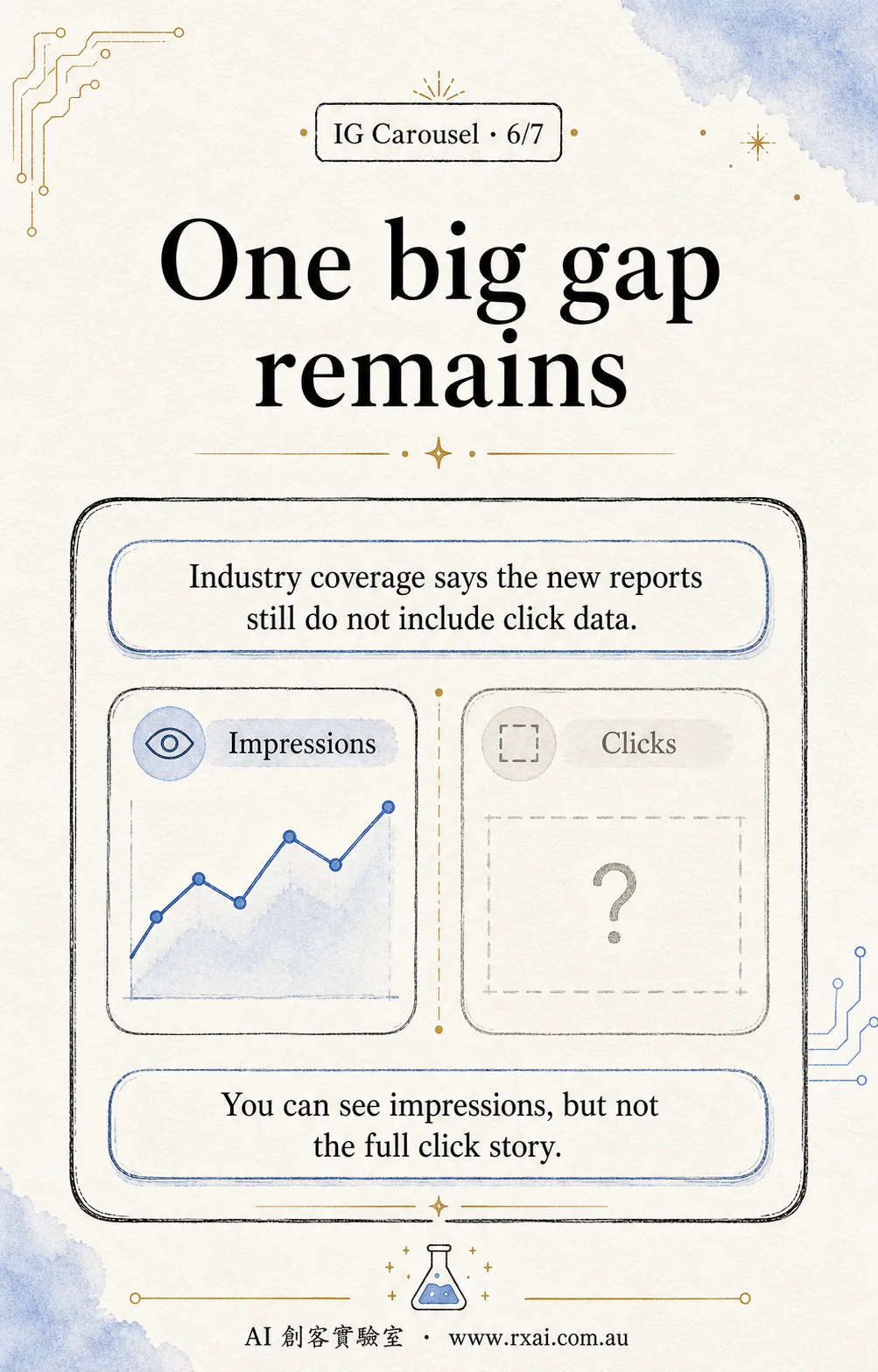
The new reports are not a complete answer yet. As Search Engine Land notes, the current Search Console generative AI reports include impressions, pages, countries, devices, and dates — but not click data. You can learn whether you are being seen, but not yet how many clicks the AI answer layer actually sends you.
What this means for your KPIs
Stop judging AI search on traditional clicks alone. Start tracking AI impressions, conversion quality, and whether your content shows up consistently for high-intent questions. Those same exports become the comparison point when a confirmed spam or ranking update rolls out.
What Does the UK CMA Ruling Add?
There is one more piece of context. On the same day, the UK's Competition and Markets Authority issued a publisher conduct requirement for Google Search. It requires Google to give publishers effective control over how their content is used in generative AI, clearer metrics on user engagement, and clear attribution. In other words, moving these AI reports and controls into Search Console is not only a product update — it is also happening under real market and regulatory pressure to make AI search more transparent.
What Should You Do This Week?
If we translate this into actions an RxAI reader can take today, start with three:
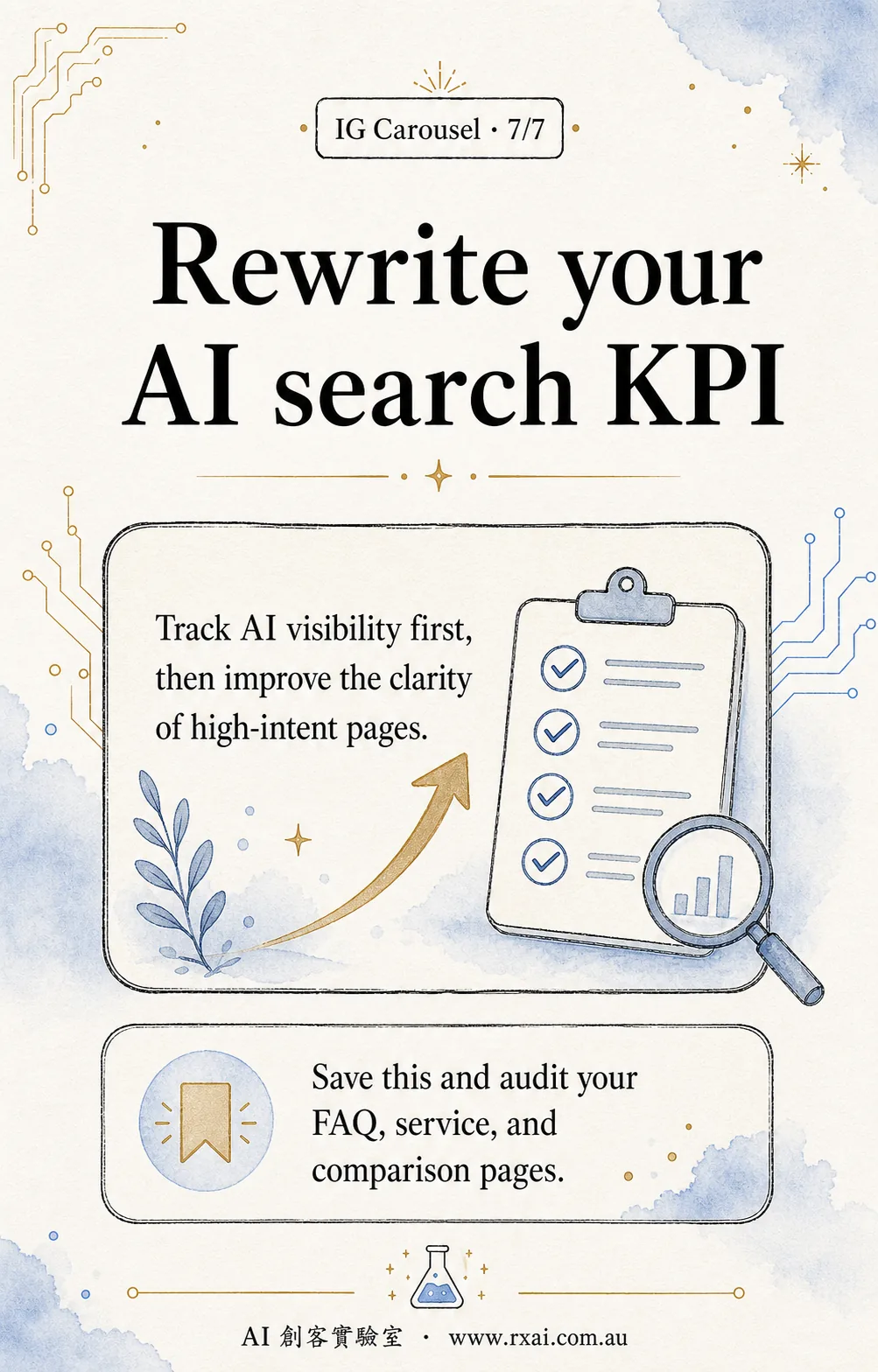
- Open Search Console and treat “AI feature impressions” as a new metric — not just total clicks.
- Inventory the pages best suited to be cited by AI answers — service pages, comparison pages, FAQs, how-to guides, and local pages.
- Re-check whether your content is genuinely clear, because Google has said AI features are reached through fundamental SEO and content clarity, not secret techniques.
The practical conclusion is simple: AI search visibility is no longer just a feeling. It is becoming something you can measure, manage, and — increasingly — expect transparency around. For brands, consultants, content teams, and small businesses, the real upgrade is not chasing another new term. It is turning your site's content into an information asset that search systems can understand and users can trust. If you want help mapping that to your own pages, talk to RxAI.
Sources
- Google Search Central blog — generative AI performance reports in Search Console
- Google Search Central documentation — AI features and your website
- UK CMA — Google search publisher conduct requirement
- Search Engine Land — Search Console AI performance reports and content controls
Frequently Asked Questions
They are a dedicated view in Google Search Console, introduced on 3 June 2026, that splits out how your site appears in generative AI features — AI Overviews, AI Mode, and the generative AI features in Discover. The reports show impressions, pages, countries, devices, and date trends.
No. Google's “AI features and your website” documentation states there are no additional technical requirements — no special schema, no machine-readable AI files, and no new dedicated markup. Appearing in AI features relies on the same fundamental SEO: crawlable, indexable, clearly written pages.
Not yet. According to Search Engine Land, the current reports include impressions, pages, countries, devices, and dates, but not click data. You can see whether you are surfaced in AI features, but not yet how many clicks that visibility sends to your site.
Open Search Console and start watching AI feature impressions as a new metric, inventory the pages most likely to be cited in AI answers (service pages, comparison pages, FAQs, how-to guides, and local pages), and make sure each page answers a real question in clear text.
Want This Applied to Your Business?
RxAI offers a free 30-minute consultation to map how these strategies fit your operations. No obligation, no sales pitch.
Book Free Consultation