What did OpenAI announce with GPT-Live?
OpenAI announced GPT-Live on 8 July 2026 as a new generation of voice models powering ChatGPT Voice. The practical change is full-duplex interaction: the model can listen and speak at the same time, making interruption, pauses and short acknowledgement responses feel more natural.
Why does this matter for SMB workflows?
For business leaders, the useful signal is not simply that ChatGPT sounds more natural. GPT-Live points to voice becoming a front door for work: a staff member can describe a customer issue, sales context or content idea out loud, then an AI workflow can prepare the next step.
Practical design point
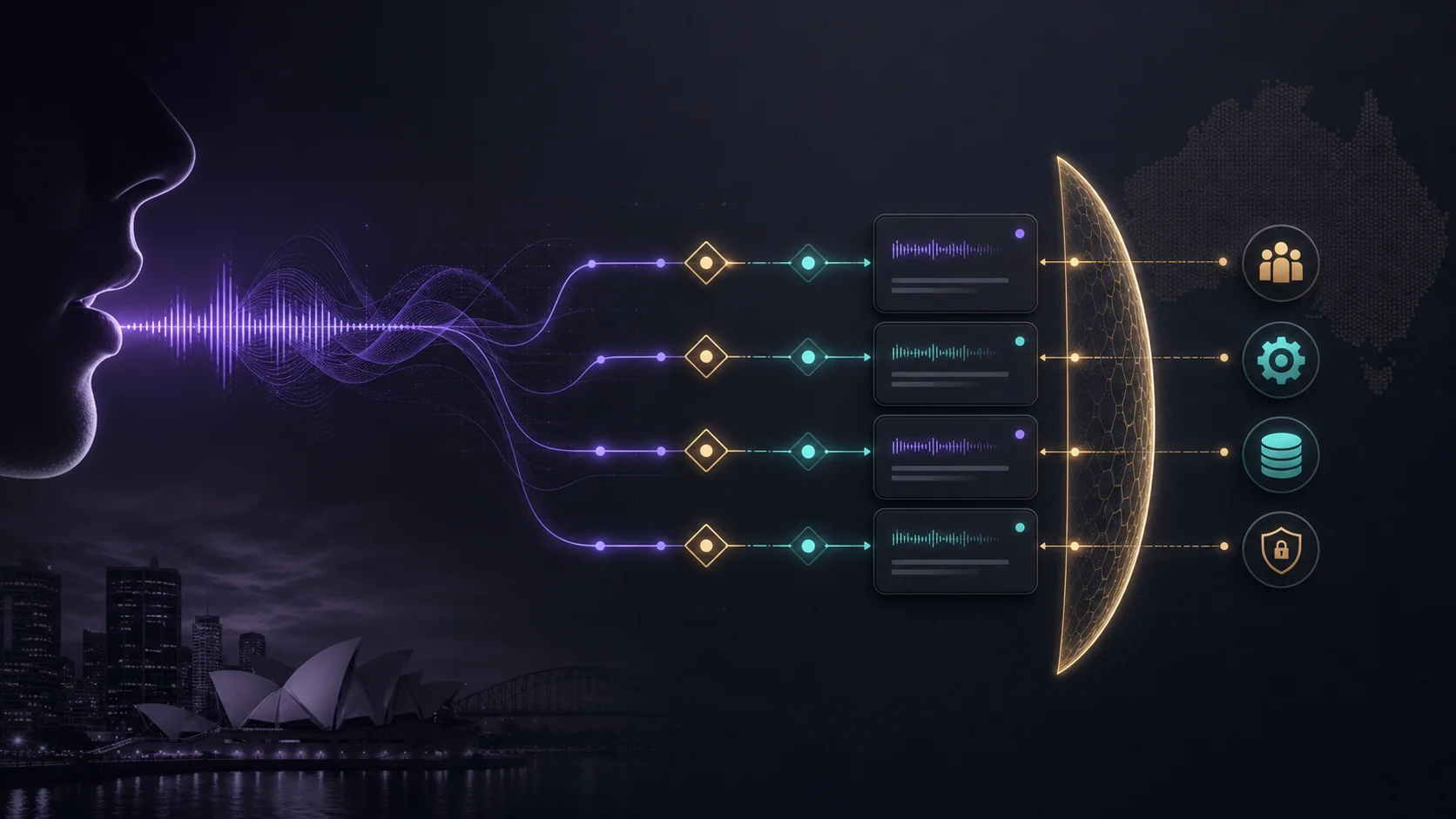
Treat voice as the capture layer. The workflow behind it still needs transcripts, tool limits, approval states and a clear handover path.
Where do workflow boundaries become important?
The more natural the voice interface becomes, the more clearly the workflow boundary must be designed. OpenAI's announcement says GPT-Live can delegate questions that need web search, deeper reasoning or complex work to a frontier model behind the scenes, with OpenAI saying GPT-5.5 is used at launch.
ChatGPT release notes add important product boundaries: GPT-Live-1 is for paid users, GPT-Live-1 mini is for Free users, and the launch does not include ChatGPT Business, Enterprise or Edu workspaces. OpenAI also says video and screen sharing are not supported at launch.
Which voice architecture should a business choose?
OpenAI's API guidance separates live speech-to-speech sessions from chained voice pipelines. Live audio fits low-latency, interruptible conversations. Chained pipelines fit predictable workflows where intermediate text, durable transcripts, policy checks, internal systems or approved answers need to be visible.
What should leaders test before deployment?
Do not test only the best English demo. Test the real operating context: Australian accents, mixed product names, industry vocabulary, hold periods, interruptions, noisy rooms, customer frustration and handover to a human. If the agent will touch customer data, orders, payments, medical advice or legal risk, the workflow needs approval gates and written evidence.
How should SMBs apply this now?
Start by deciding which tasks are safe for voice initiation and which actions require confirmation. A voice agent might create a support ticket, draft a follow-up, summarise a meeting or collect intake details. It should not quietly update sensitive systems without permissions, logging and review.
RxAI helps teams turn emerging AI capabilities into practical automation with controlled workflows, source checks and human review. Start with the operating model in our AI automation services, or contact us to map a controlled pilot.
Sources
- OpenAI - Introducing GPT-Live
- OpenAI Help Center - ChatGPT release notes
- OpenAI API docs - Realtime and audio
- OpenAI API docs - Voice agents
- TechCrunch - OpenAI releases new voice models for more natural live conversations
Frequently Asked Questions
GPT-Live is OpenAI's new generation of voice models for ChatGPT Voice, announced on 8 July 2026. It supports full-duplex interaction, meaning the model can listen and speak at the same time.
Not by default. Voice is useful for capturing intent and starting a workflow, but sensitive actions still need transcripts, permissions, approval gates and audit trails.
A chained pipeline is better when the business needs visible intermediate text, durable records, policy checks, predictable steps, or reuse of an existing text-based agent workflow.
OpenAI release notes say GPT-Live-1 is not available in ChatGPT Business, Enterprise or Edu workspaces at launch, so business deployment planning should check current workspace availability before relying on it.
Want This Applied to Your Business?
RxAI offers a free 30-minute consultation to map how these strategies fit your operations. No obligation, no sales pitch.
Book Free Consultation